I am a professor of econometrics. My research is at the intersection of statistics, numerical analysis, operations research, psychology, economics, management and philosophy.
PhD in Science, major in Mathematics, 2005
Université Paris Dauphine, Paris (France)
PhD in Management and Industrial Engineering, 1999
Politecnico di Milano, Milano (Italy)
DEA MASE, 1999
Université Paris Dauphine/ENSAE, Paris (France)
MSc in Management and Industrial Engineering, 1996
Politecnico di Milano, Milano (Italy)
Master Analisi e Valutazione delle Politiche Pubbliche
Central-German Doctoral Program Economics
PhD in Methods and Models for Economic Decision
PhD in Econometrics and Empirical Economics
Dipartimento di Economia e Produzione
Master MEDEA (Management ed Economia dell’Energia e dell’Ambiente)

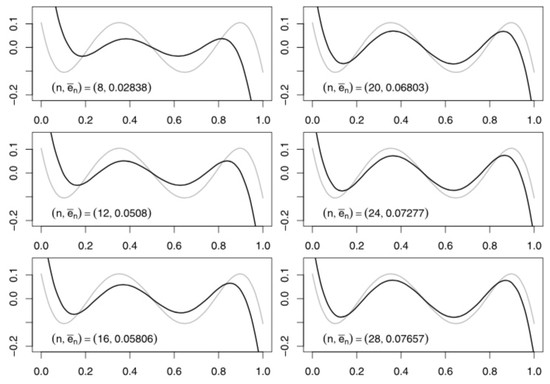
In Stochastic Programming, Statistics or Econometrics, one often looks for the solution of optimization problems of the following form:

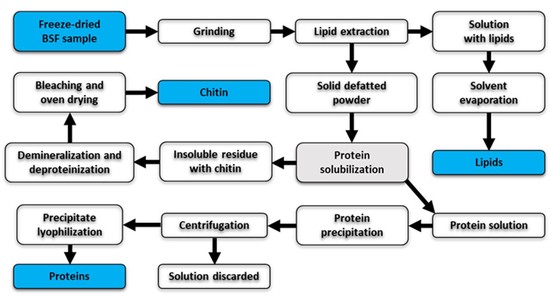
The increasing importance of biological sciences for creating value added in many economic sectors contributed to the rise of the now popular term “bioeconomy,” referring to “the set of economic activities relating to the invention, development, production and use of biological products and processes” (OECD, 2009), which are characterized by the accent on the reduction of environmental pollution and the adoption of sustainable practices.

Still to be written

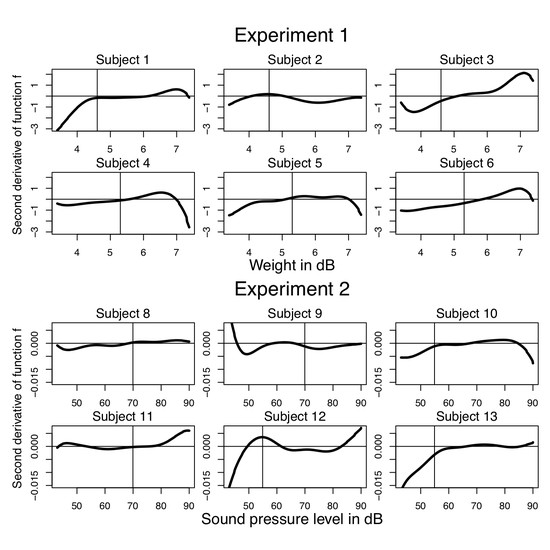
Measurement theory is “a field of study that examines the attribution of values to traits, characteristics, or constructs. Measurement theory focuses on assessing the true score of an attribute, such that an obtained value has a close correspondence with the actual quantity” (APA Dictionary of Psychology, 2nd ed.
Still to be written

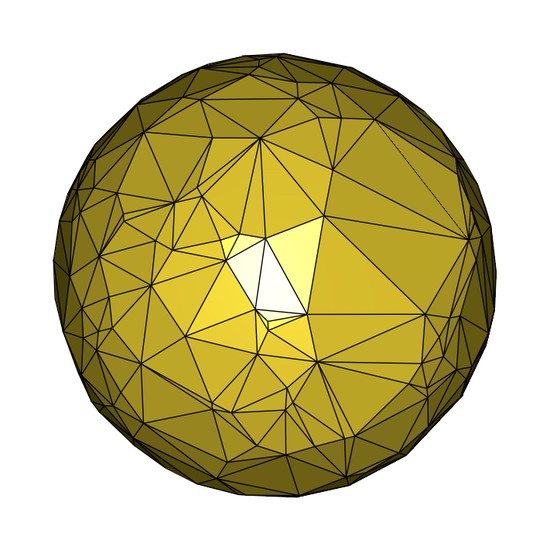
Quantifying uniformity of a configuration of points on a space is a topic that is receiving growing attention in computer science, physics and mathematics. The problem has interesting connections with statistics, where several tests of uniformity have been introduced.

In 1857, the German economist Ernst Engel published an article, under the title ‘Die vorherrschenden Gewerbszweige in den Gerichtsämtern mit Beziehung auf die Productions- und Consumtionsverhältnisse des Königreichs Sachsen’, in the journal Zeitschrift des Statistischen Bureaus des Königlich Sächsischen Ministeriums des Innern. This article was at the origin of the so-called Engel’s Law. Engel republished his findings in several other forms: one time in French in Bulletin de l’institut international de statistique in 1887, as a book in German in 1895, again in German in Bulletin de l’institut international de statistique in 1895. Despite the difficulty in accessing a copy of the original article, several authors cited it. In this paper, we identify some recurring errors in these citations of the 1857 paper and we try to reconstruct their origin.
Establishing credibility and trustworthiness is essential in Economic Agent-Based Modeling (ABM), where clear epistemic standards cannot be defined a priori. In this paper, we first review the notions of trustworthiness and credibility in modeling. We then introduce a framework that emphasizes the modeler’s epistemic responsibility to ensure coherence between modeling purposes, strategies and targets. We examine the challenges in assessing model reliability that arise from the interaction of conceptual, algorithmic and computational constituents, and we propose a meta-analytical approach to enhance model consistency by conceptualizing ABMs as iterated analogies. Our analysis outlines strategies for improving model accessibility and reliability while highlighting the modeler’s role in preventing mistargeting and misuse. This research provides a normative basis for justifying the credibility of both idealized and targetless models by promoting transparency and consistency between model design and intended purposes.
Agent-based modeling (ABM) is a simulation technique which has been increasingly integrated into the economic discipline in order to understand complex systems. However, most of everyday research activities rely on the researchers' consensus concerning practical choices about modeling strategies, computational boundaries under scrutiny and the extent of empirical validation. Particularly lacking are reflections on the semantic construction of conceptual models. The paper reviews existing theoretical frameworks leading to understanding ABM as a technique, where the cognitive processing instantiated by the instrument is distributed across different modeling layers, including conceptual, algorithmic and computational ones, which can be interpreted as an interlinked set of analogies. Then, it introduces a framework for assessing ABM conceptual adequacy and tests it on two families of models in the field of economics of innovation, revealing several modeling constraints.
We consider measures of covering and separation that are expressed through maxima and minima of distances between points of an hypersphere. We investigate the behavior of these measures when applied to a sample of independent and uniformly distributed points. In particular, we derive their asymptotic distributions when the number of points diverges. These results can be useful as a benchmark against which deterministic point sets can be evaluated. Whenever possible, we supplement the rigorous derivation of these limiting distributions with some heuristic reasonings based on extreme value theory. As a by-product, we provide a proof for a conjecture on the hole radius associated to a facet of the convex hull of points distributed on the hypersphere.
We consider the estimation of the entropy of a discretely-supported time series through a plug-in estimator. We provide a correction of the bias and we study the asymptotic properties of the estimator. We show that the widely-used correction proposed by Roulston (1999) is incorrect as it does not remove the
Insubria, Economia è un’eccellenza: fondi in arrivo, LaPrealpina.it, 30 December 2022
Insubria, il Ministero seleziona Economia tra le eccellenze, CiaoComo, 30 December 2022
Varese: Università Insubria “eccellente” grazie a Economia, Rete55, 30 December 2022
“Varese pensi in grande. Solo così può crescere”, La Prealpina, 15 April 2023
Varese: PGT, all’Insubria il “polso” della città, Rete55, 6 Ottobre 2023
Varese, l’Insubria studia il Pgt, La Prealpina, 6 Ottobre 2023
ProPla – Proteins from Plastics, The Protein Factory 2.0, 1 March 2023
Così le microplastiche diventano aminoacidi, Il Giorno, 5 May 2023
Come trasformare le micro-plastiche in proteine, Smart City, 15 June 2023
Più PROteine dalla PLAstica, Varese Focus, 20 September 2023